What is hip joint?
Hip joint is the body part that connects the thigh to the pelvis. It is a ball and socket (cup) type joint. The ball part is formed by the upper end of the thigh bone called femur. The cup is formed by the pelvis and is referred to as the acetabulum. The ball and socket configuration gives excellent mobility and stability to the hip joint.
Dr Arun Kannan specializes in the following special types of hip replacement
Hip replacement for AVN, Hip replacement after hip fracture, Dual mobility hip replacement, Ceramic hip replacement, Uncemented hip replacement
What is hip replacement?
Hip replacement refers to replacement of the damaged ball and socket parts with artificial joint where a metal ball rotates inside a cup part lined with smooth plastic. Hip replacement was popularized in the west in 1970s and is firmly established as one of the most successful surgeries in the whole of medicine with success rates over 96%.
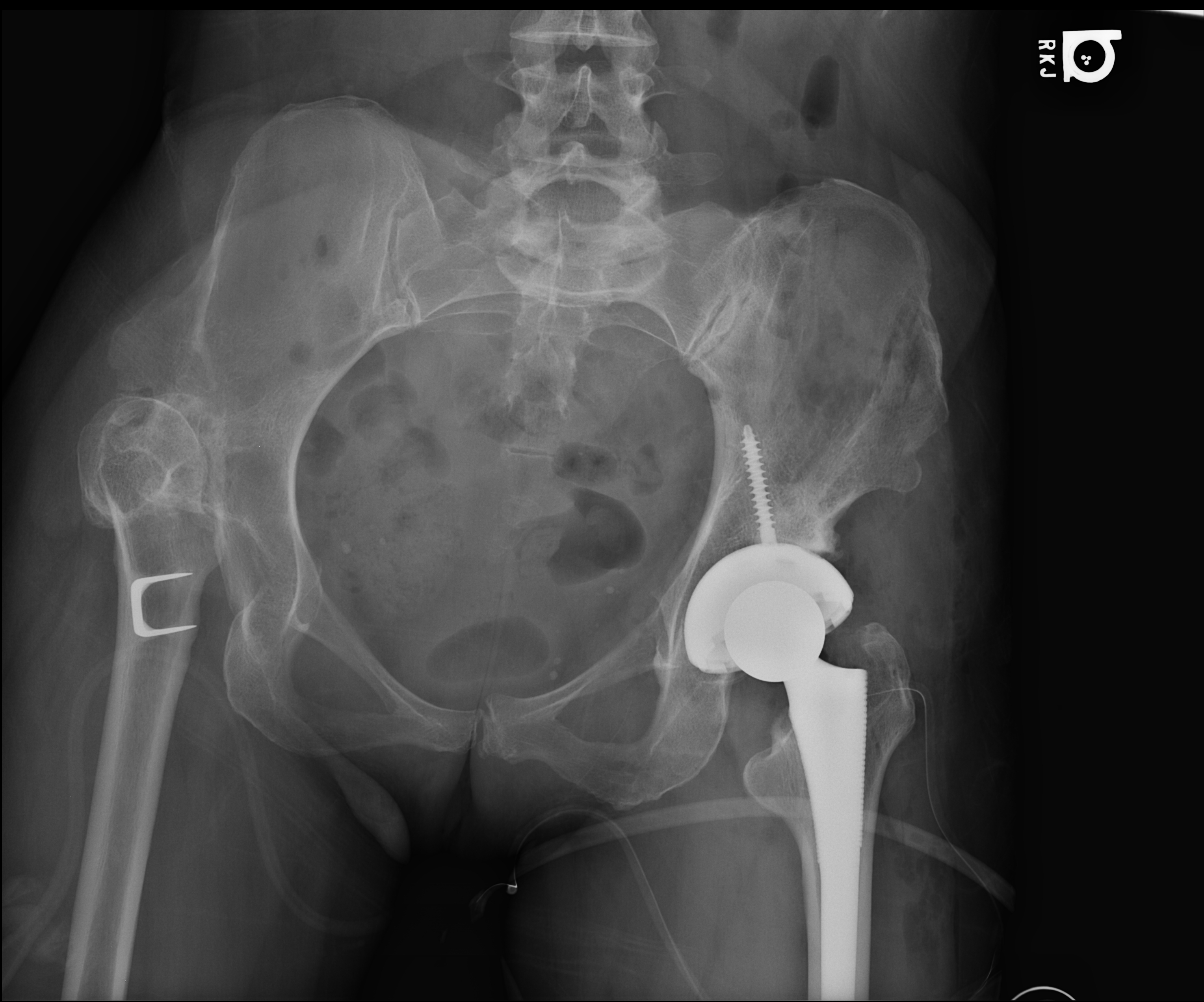
An Example of Complex Hip Replacement
When is hip replacement necessary?
Common reasons for hip replacement in India include the following:
- Osteonecrosis or avascular necrosis where the ball part loses its blood supply may require hip replacement in later stages (click here for a detailed description of osteonecrosis)
- Certain hip fractures, hip fractures that have not healed after being treated by traditional bandaging methods such as 'puthur kattu', failed internal fixation of hip fractures benefit from hip replacement (click here for a detailed discussion on hip fractures and their treatment)
- Patients with severe hip pain and stiffness from ankylosing spondylitis, rheumatoid arthritis or osteoarthritis get dramatic relief following hip replacement.
What are the benefits of hip replacement?
- Ability to walk soon after surgery, usually the very next day after surgery
- Painless walking in the long term
- Stable hip joint
- Increased mobility and movement
- Increased leg strength
- Improved quality of life, ability to return to normal activities
How successful is hip replacement?
Hip replacement is one of the most successful surgeries in the whole of medicine with success rates over 96%. The hip replacement is so successful that many people even forget they have an artificial hip joint- termed 'forgotten joint replacement'. People can walk without pain and engage in all regular activities including swimming, jogging etc. While people who have had replacements have the ability to even run marathons, we generally advise against repetitive high impact activities to prolong the life of the artificial joint.
How long do hip replacements last?
90-95% hip replacements that were done 20 years back have lasted 20 years!! With current advancements, new materials and advanced surgical techniques, they are expected to last even longer, up to 25-30 years.
What are the latest advances in hip replacement?
We now have advanced materials in terms of the plastic insert used. These have very high resistance to wear and are expected to last longer than 25-30 years. We have also developed ceramic bearing hip replacements that have the lowest wear rate. We prefer to use ceramic on ceramic hip replacements in young patients requiring hip replacement.
The other major advance has been in terms of surgical approach. Direct anterior approach has become very popular in the US over the last 5 years. This approach is different from the anterolateral or posterior approaches that were previously used. The major advantages of this approach are explained below
Why us for hip replacement?
MUSCLE SPARING HIP REPLACEMENT: DIRECT ANTERIOR APPROACH
Total hip replacement is a very rewarding surgery, but has traditionally involved splitting or cutting across muscles to reach the hip joint that makes recovery slow. Our team has obtained extensive training in "Muscle Sparing" anterior hip replacement in the USA. This technique has gained great popularity over the past few years due to its advantages.
- No splitting or cutting of muscles
- Only 3-inch incision
- Done under Xray control; errors are eliminated
- Dislocation and nerve damage that can happen with regular hip replacements avoided
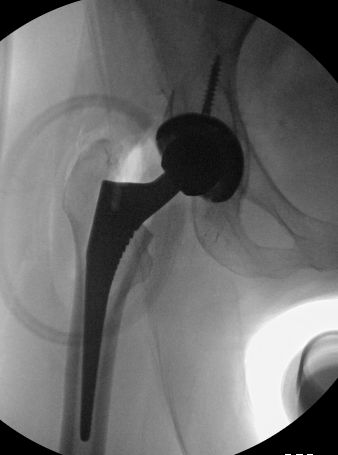
One of the advantages of direct anterior approach is the use of Xray control during surgery. This ensures perfect positioning of the components. Below is the xray view of the hip taken at surgery and showing perfect positioning of the components.
Please click on this video to see a 68 year old patient who underwent hip replacement with us. He was able to walk and sit without pain. The degree of hip movement was also remarkable.
What brand of hip implant or prosthesis should I get?
There are several manufacturers for hip implants. The five major manufacturers who are internationally renowned include Depuy, Zimmer, Stryker, Smith and Nephew and Biomet. While it is difficult to pick one over the other in broad terms, one can be comfortable in the thought all of them have the same basic concepts. The one that your surgeon is comfortable using should be the best implant for you. We use the best hip replacement implants available from these manufacturers and they are the same as the ones widely used in top joint replacement centers across the world.
What is the cost of hip replacement?
The implant cost is the major cost involved in hip replacement and usually accounts for approximately 50% of the total cost. The cost of hip replacement is therefore heavily dependent on the cost of the imported prosthesis that is used. We will discuss the implant options that would be best for your situation during the consultation. The discussion will also include the costs involved with the implant and the surgery.
How is the recovery following hip replacement surgery?
In general, our patients adopt the following schedule after hip replacement surgery.
Warning: session_start(): Cannot send session cookie - headers already sent by (output started at /home2/edotsind/public_html/jayamhospital/hip_replacement.php:499) in /home2/edotsind/public_html/jayamhospital/html.php on line 3
Warning: session_start(): Cannot send session cache limiter - headers already sent (output started at /home2/edotsind/public_html/jayamhospital/hip_replacement.php:499) in /home2/edotsind/public_html/jayamhospital/html.php on line 3