Arthroscopy is a procedure in which a joint is viewed through a key hole. A camera is inserted through the key hole and gives the surgeon a clear view of the inside of the knee joint. With this approach, we can clearly visualize any abnormalities with the knee joint and correct them. We now have high definition monitors and high resolution cameras that have made key hole surgery possible for many problems of the knee joint. Worldwide, more than 40 lakh procedures are performed each year.
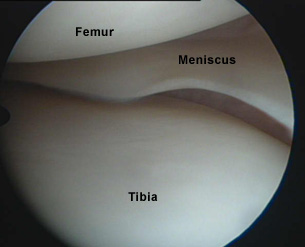
Arthroscopic view of the knee
How is knee arthroscopy done?
Knee arthroscopy is generally done through two key hole sized incisions in front of the knee. One portal (key hole) is used to insert a camera into the joint. The camera is about the size of a pen and is inserted through the key hole. The high resolution image from the camera is viewed on a high definition screen. Through the other key hole specialized thin instruments are passed into the knee joint and any work required in the knee joint is carried out under the vision of the camera.
Can arthroscopy help you?
Arthroscopy is extremely helpful for carefully selected patients. The following are the conditions for which arthroscopy is commonly used:
Meniscectomy: Meniscus is a tissue within the knee joint which shares the load in the knee and acts like a washer. This may get torn and pieces of it may get caught between the bones giving rise to pain, locking or buckling of the knee. In such cases arthroscopy is helpful in shaving the loose parts of the meniscus and providing pain relief.
Meniscal repair:If the meniscus gets torn in the zone with blood supply, it can be repaired successfully using knee arthroscopy. There are several techniques for suturing such torn menisci. This allows the tear to heal and the meniscus resumes its weight sharing function.
Loose body removal:Sometimes loose pieces of cartilage or tissue may form in the knee joint and give rise to discomfort. In such cases, arthroscopy is very successful in removing loose bodies and open surgery can be entirely avoided
Biopsy:In some cases, arthroscopy can be used to obtain small slivers of tissue from inside the knee joint for testing. This is called biopsy.
Ligament reconstruction:The stability of the knee depends on important ligaments within the knee joint. When these are torn from sports injuries or other accidents, ligament repair may be necessary. In such cases, ligament reconstruction may be successfully performed with arthroscopic techniques. The most common such procedure is ACL (anterior cruciate ligament) reconstruction. Please refer to our sections on ACL injury and ACL Reconstruction for more information.
Recovery
Due to the minimally invasive nature of the procedure, recovery is much faster after knee arthroscopy than after open surgery. Unless you have had a ligament reconstruction or meniscal repair, you may be able to put full weight and walk within a few hours after the surgery. You may be asked to use crutches for support for a week or so. You will be placed on a exercise routine that will facilitate your recovery.
Warning: session_start(): Cannot send session cookie - headers already sent by (output started at /home2/edotsind/public_html/jayamhospital/knee_arthroscopy.php:331) in /home2/edotsind/public_html/jayamhospital/html.php on line 3
Warning: session_start(): Cannot send session cache limiter - headers already sent (output started at /home2/edotsind/public_html/jayamhospital/knee_arthroscopy.php:331) in /home2/edotsind/public_html/jayamhospital/html.php on line 3