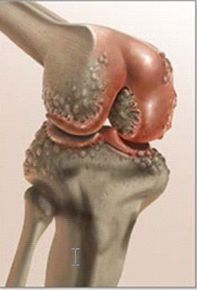
The joints of our body have a smooth lining of a special tissue called cartilage that provides the smooth movement at the joint. When this layer of cartilage gets damaged, it is called arthritis. Arthritis is commonly due to the following causes:
Osteoarthritis
Osteoarthritis is the most common cause of knee arthritis. It is a generative condition mostly seen in older people where the cartilage generally wears away as it has lost its regenerative capacity.
Inflammatory Arthritis
Inflammatory arthritis of the knee joint is most often due to rheumatoid arthritis. This condition is due to a disorder of the immune system of the body. It commonly involves both the knees and leads to destruction of the joint. When identified early and treated properly, the disease can kept under control. However, one must remember that the treatment is for long periods. It is not a good practice to stop medicines on your own. It will be best if one doctor takes care of the treatment for a long time.
Infective arthritis
In our country, infections-especially tuberculosis- are often a cause of arthritis. This should be identified early and promptly treated to avoid long term complications
Post-traumatic Arthritis
Post-traumatic arthritis can develop after an injury to the knee. This type of arthritis is similar to osteoarthritis and may develop years after a fracture, ligament injury, or meniscus tear.
Pain from osteoarthritis develops gradually. It is often activity related and people first notice difficulty with rising from sitting position or going up and down stairs. They develop pain with walking considerable distances as well. People also tend to develop stiffness and night pain. The first few steps after waking up may be particularly difficult. Some people may even notice that their leg appears bowed compared to what it was a few years back.
An evaluation of the amount of pain and disability and how it has affected your life is very important in deciding treatment. The doctor will do his best to assess this by asking specific questions. He will also perform a focussed exam assessing your walk, range of movement and joint stability.
X-rays are usually obtained to evaluate arthritis and your doctor may be able to show you how much cartilage damage you have suffered. Standing Xrays are ideal for evaluating arthritis. Other tests such as blood tests and MRI scans may be necessary for other types of arthritis.
There are different methods of treating osteoarthritis without surgery. The effectiveness of the nonsurgical measures varies from person to person and also depends on the severity of osteoarthritis. The purpose of nonsurgical treatment is to reduce pain and increase function, as there is no treatment that can bring back the lost cartilage. The nonsurgical measures therefore cannot cure osteoarthritis, but can control it. We would advise caution against believing in campaigns that state that they cure osteoarthirits. The following are some of the non surgical measures to treat and control arthritis.
Exercise
Exercises help by maintaining flexibility and strength in the knee joint.. Physiotherapy is helpful in reducing pain and improving function. Your doctor and physiotherapist can help you develop an individualized exercise program.
Also, exercises can help reduce weight. With weight reduction, there is less load on the knee joint with each activity and this may itself reduce your pain substantially. If you have tried reducing weight, but not have been successful, our dietician will be able to help you by giving professional advice.
Activity Modification
Certain activities such as squatting, climbing stairs can place excessive load on the knee and should be avoided or minimized. This will reduce the load on the knee and prolong the life of cartilage that is left.
A common but wrong way to approach the problem with osteoarthritis is to stay confined to the house with very little exercise activity. Such an approach severely affects your stamina and fitness in the long run. They are also at a higher risk of developing numerous problems associated with sedentary lifestyle and obesity that include hypertension, diabetes, coronary artery disease and stroke. Fitness thus lost in old age is difficult to regain. It is therefore best to stay active. It is recommended by several expert bodies that elderly people should do active exercise such as brisk waking or cycling for at least half an hour a day, 5 times a week. Household activities such a working throughout the day within the house, even though it tires you, involves very little energy expenditure and should not be considered as exercise. If your knee is the reason that you are not able to maintain this activity level, then it is strongly recommended that you consider effective treatment for the same.
Knee Braces
Knee braces that are used in osteoarthritis are of two types- soft and rigid. Soft knee braces also commonly known as knee caps are commonly used and help with proprioception and pain relief. Rigid knee braces that are technically unloading braces of the knee joint are more effective, but also a bit more cumbersome to use. They are worn when walking and reduce the pain associated with walking.
Other Methods
Other measures that are used include canes, water exercises and topical ointments etc…
Different types of medicine are useful in osteoarthritis. The medication and the duration for which it needs to be taken depend on the stage of the disease and the purpose of the medication.
Most commonly used medications are anti-inflammatory medications or NSAIDS. They are often useful in controlling inflammation and pain in the joint. They can sometimes cause gastritis as a side effect. When taken continuously for long periods they can cause significant side effects such as kidney damage. They should therefore be used only as directed by your doctor.
Special type of medicines amongst the NSAIDS that are used in arthritis are the COX-2 inhibitors. They are more specific than other NASIDS in their action and therefore cause fewer side effects.
Glucosamine and Chondroitin
Glucosamine and chondroitin are oral food supplements that may relieve the pain of osteoarthritis. These are two large molecules that are found in the cartilage of our joints. Strictly speaking, they are sold in western countries as food additives in supermarkets rather than as medicines. They may be helpful in early stages of osteoarthritis. They should be taken on a daily basis for 2-3 months before the effect can be realized. It is not helpful to take them intermittently on an 'as and when needed' basis.
Two types of injections injected directly into the knee joint are used in the treatment of osteoarthritis.
Cortisone injections
Cortisone is a hormone that is naturally produced in the body and acts as powerful anti-inflammatory agent. They are particularly useful in relieving inflammatory pain associated with osteoarthritis. They can be injected into the space between bones of the knee joint using thin needles in a sterile manner. They are generally not any more painful than regular intramuscular injections given in the buttock. The pain relief is temporary and may last up to 6 months. They are generally not given more than 4 times per joint per year. Although systemic side effects are rare, they may increase the blood glucose and are avoided in those with uncontrolled diabetes. They may sometimes cause irritation in the joint for a few days before their anti-inflammatory effect kicks in.
'Joint fluid' injections
The normal knee joint has a joint fluid that provides lubrication for smooth movement. Hyaluronic acid is a major constituent of the joint fluid. Special injections containing hyaluronic acid have been developed for treatment of osteoarthritis. It may be helpful in earlier stages of the disease. They are injected directly into the knee joint and appear to have pain relieving and anti-inflammatory properties. They do not provide immediate pain relief. The effect develops slowly over a period of time. The effect may then last several months. The injections can be repeated in 6 months to 1 years as necessary.
Surgical treatment for arthritis may be required, if the medical measures have not given adequate relief. It is generally better try medical measures before deciding on surgery. In some situations, the bone damage may be so bad that the orthopaedician may suggest that nonsurgical measures are of little value. The decision on proceeding with surgery is generally based more on the level of symptoms and activity restrictions than on the degree of arthritis on the x-rays. Surgical options include knee arthroscopy or key hole surgery, osteotomy to realign the biomechanics of the knee joint or a joint replacement surgery.Knee replacement surgery which has been successfully done in millions of people all over the world is considered one of the wonders of modern medicine, when properly done. Please click here to know more about knee replacement.
Warning: session_start(): Cannot send session cookie - headers already sent by (output started at /home2/edotsind/public_html/jayamhospital/arthritis_of_the_knee.php:419) in /home2/edotsind/public_html/jayamhospital/html.php on line 3
Warning: session_start(): Cannot send session cache limiter - headers already sent (output started at /home2/edotsind/public_html/jayamhospital/arthritis_of_the_knee.php:419) in /home2/edotsind/public_html/jayamhospital/html.php on line 3