Shoulder pain and stiffness are very common problems. These may be caused by periarthritis or frozen shoulder, shoulder impingement, rotator cuff tears or labral tears.
Frozen Shoulder:
It is also known as periarthritis or adhesive capsulitis and results from inflammation and stiffening of soft tissue structures of the shoulder joint. It commonly results in pain and stiffness of the shoulder.
Treatment:We place such people on a physiotherapy program to reduce pain and improve mobility of the shoulder joint. They are then taught an exercise program to maintain flexibility, which they should to do on a daily basis at home. The exercises are simple and take very little time to perform. Please refer to our section on Exercises for Frozen Shoulder. Most people recover successfully with such simple measures. In rare cases where the pain and stiffness are unresponsive to exercise treatment, we give targeted injections to reduce pain. Those with very severe stiffness not improving with physiotherapy may require a key hole procedure to loosen the tight soft tissues. Following this procedure, the improvement in mobility of the shoulder is often dramatic
Shoulder Impingement/ Rotator cuff tendinitis:
Shoulder impingement manifests with shoulder pain, especially with having to work above the shoulder level. It results from reduced space for muscles (rotator cuff) that move the shoulder joint. It is common in young and middle aged people who do repetitive over head work.
Treatment:Physiotherapy for stretching and strengthening of the shoulder muscles is the first line of management. Occasionally a steroid injection administered into the bursa may be required for controlling pain. Pain which is significant and not responding to physical therapy or injections may necessitate a keyhole surgery to clear the space for the muscles (rotator cuff). As it is done as a key hole procedure, recovery following surgery is fairly rapid.
Rotator cuff tears
Rotator cuff is formed by muscles which move and stabilize the shoulder joint. It is particularly important for activities above the level of the shoulder. Tears of the rotator cuff are common and will weaken your shoulder. This means that many daily activities, like combing your hair or getting dressed, may become painful and difficult to do. MRI scan is commonly used in the evaluation of rotator cuff tears.
Delay in taking treatment may worsen the condition. A rotator cuff tear can get larger over time. It may also cause severe arthritis of the shoulder in the long run. Chronic shoulder and arm pain are good reasons to see your doctor. Early treatment can prevent your symptoms from getting worse.
Treatment:Majority of people improve with activity modification, medications and an exercise program. Continued pain or large tears may necessitate surgery. Surgery involves reattachment of the rotator cuff by stitching it to the bone. It is done with arthroscopic assistance.
Recurrent Dislocation of Shoulder
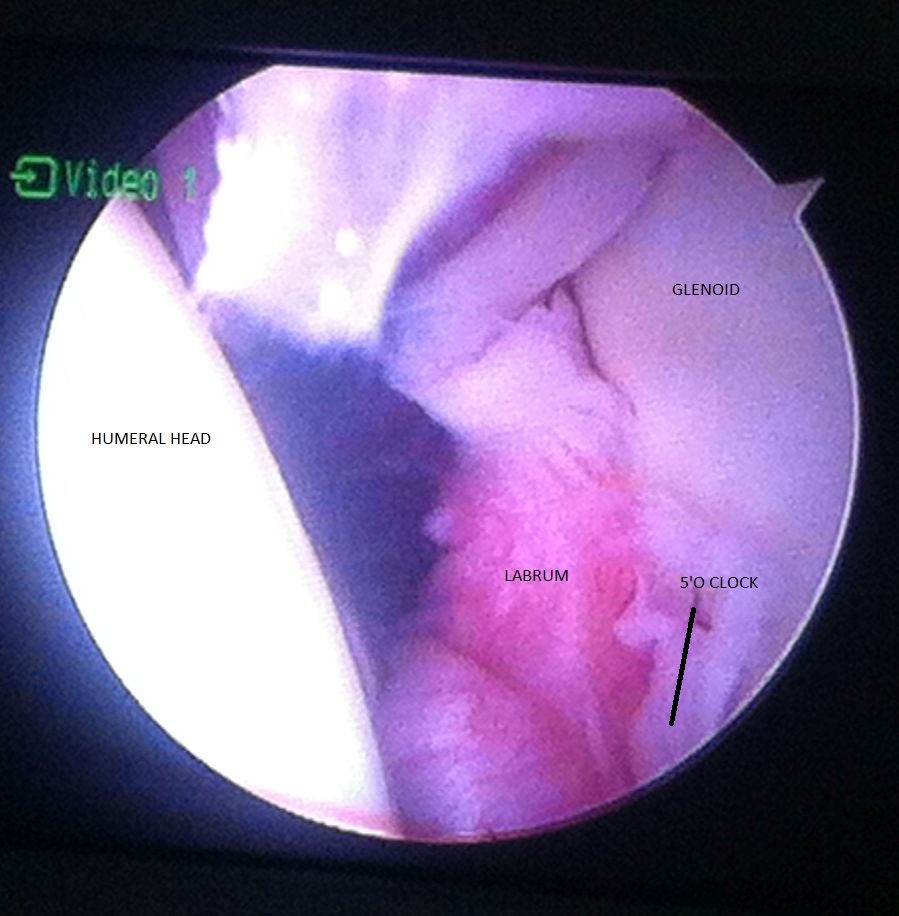
The shoulder joint is dependant on several factors for maintaining its stability. Injury to one or more structures or laxity of the ligaments may be associated with repeated dislocation (ball coming out of the socket) of the shoulder joint. Without treatment, the injury may be aggravated with each dislocation. It is therefore very important to determine the cause of shoulder dislocation and treat it appropriately. MRI scan is commonly used to determine the nature of injury. Depending on the type of dislocation and the activity level of the patient, one may be treated with exercises or alternatively with surgery. In general, young or middle aged people with recurrent dislocation that started with one episode of injury are likely to have sustained what is called a labral tear. Labrum is a tissue that gives stability to the shoulder joint. In such cases, they tend to have recurrent dislocation unless the labrum is repaired. We specialize in labral repair (Bankart's repair) done through key hole incisions around the shoulder joint. This is called arthroscopic Bankart's repair.
Shoulder arthroscopy:
Many procedures in the shoulder joint do not need open surgery when the surgeon has expertise in arthroscopy of the shoulder. We routinely perform most of the shoulder procedures using arthroscopy. This involves placement of 2-3 key holes around the shoulder. Conditions which are commonly treated by shoulder arthroscopy are recurrent dislocation (Bankart's repair), rotator cuff tear and occasionally, adhesive capsulitis. The recovery is quick and remarkable following arthroscopic surgery.
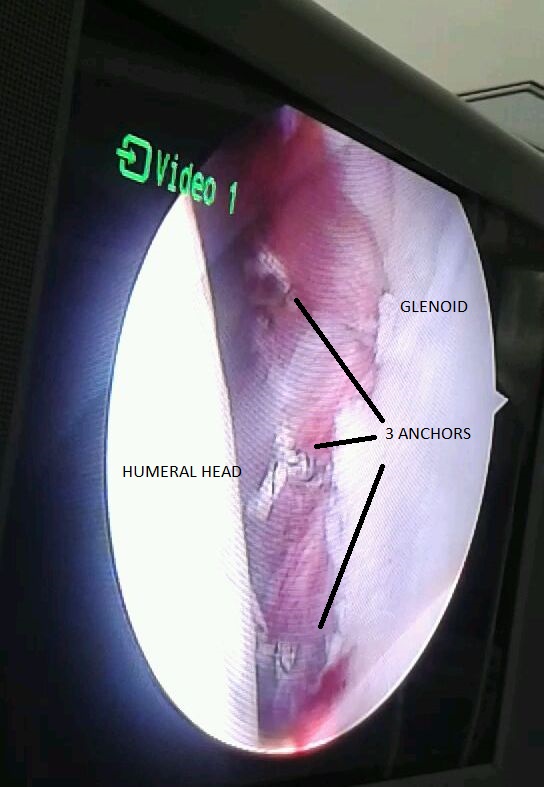
The figure on the left shows the arthroscopic view of the shoulder joint, demonstrating a large labral tear. The patient had recurrent episodes of shoulder dislocation. The labrum was repaired arthroscopically using 3 suture anchors. The shoulder instability was corrected.
Warning: session_start(): Cannot send session cookie - headers already sent by (output started at /home2/edotsind/public_html/jayamhospital/Shoulder_Arthroscopy.php:345) in /home2/edotsind/public_html/jayamhospital/html.php on line 3
Warning: session_start(): Cannot send session cache limiter - headers already sent (output started at /home2/edotsind/public_html/jayamhospital/Shoulder_Arthroscopy.php:345) in /home2/edotsind/public_html/jayamhospital/html.php on line 3