Hip Revision Surgery
CORRECTING HIP REPLACEMENTS THAT HAVE GONE WRONG
Joint replacement is one of the most successful operations in the whole of medical field and millions of people have benefitted from this procedure. The fact that almost one million joint replacements are done in the US alone each year and the numbers are steadily increasing each year stands testimony to the success of the procedure. In India, the number of joint replacements has been increasing steadily over the last decade with over 10% growth each year. While hip joint replacements are extremely successful and perform very well for about 15 -20 years, they may wear out with time. After 15-20 years, 10 to 20 % of joint replacements require a revision surgery as they get worn out. With current advances in the field of joint replacement, they are expected to last even longer. When they fail after having served their purpose, they may be corrected by revision surgery..
Why hip replacements fail
LOOSENING OF HIP REPLACEMENT:
With time, as the joint is loaded and used millions of time over many many years, they can become worn out. The smooth bearing surface of the artificial joint is lost. This may result in loss of the stable interface between the bone and the implant. Once loosening occurs, the joint may become painful and unstable. Implant loosening can be detected on Xrays. Some times other tests such as bone scans may be required to detect loosening. Once loosening occurs, the supporting bone may become weak. In such cases it is necessary to revise the implant to prevent further damage to the bone. With revision surgery, a new implant is generally fixed to the bone and one can expect to return to the state of well functioning joint replacement.
INFECTED HIP REPLACEMENT:
Joint replacement is associated with a small risk of infection. With current surgical techniques, antibiotic regimens and operating theatre conditions, infection rate is about 0.5%. Infection can cause the prosthesis to loosen. Infection may manifest with swelling, pain, drainage or loosening of the joint. Infection is often confirmed by taking fluid from the knee for testing, in addition to certain blood tests. Infection of a joint replacement may require revision surgery.
DISLOCATION OF HIP REPLACEMENT:
A joint replacement is made of two main components that are held together by the body's soft tissues. When the two components are stable in bone, but have dissociated from each other, it is referred to as a dislocation. It is felt as a sudden popping of the joints. It is often managed without surgery by sedating the patient and reducing the joint into position. Sometimes, surgery may be required if the dislocation cannot be reduced or if it happens multiple times.
Revision Hip Replacement:
Revision of a total hip replacement may involve a simple bearing change, change of the cup part or change of the stem part or both, depending on the cause of revision. Hip revision surgery is more challenging than primary hip replacement due to multiple technical factors such as scarring, loss of bone stock, specialized inventory required for removing implants etc
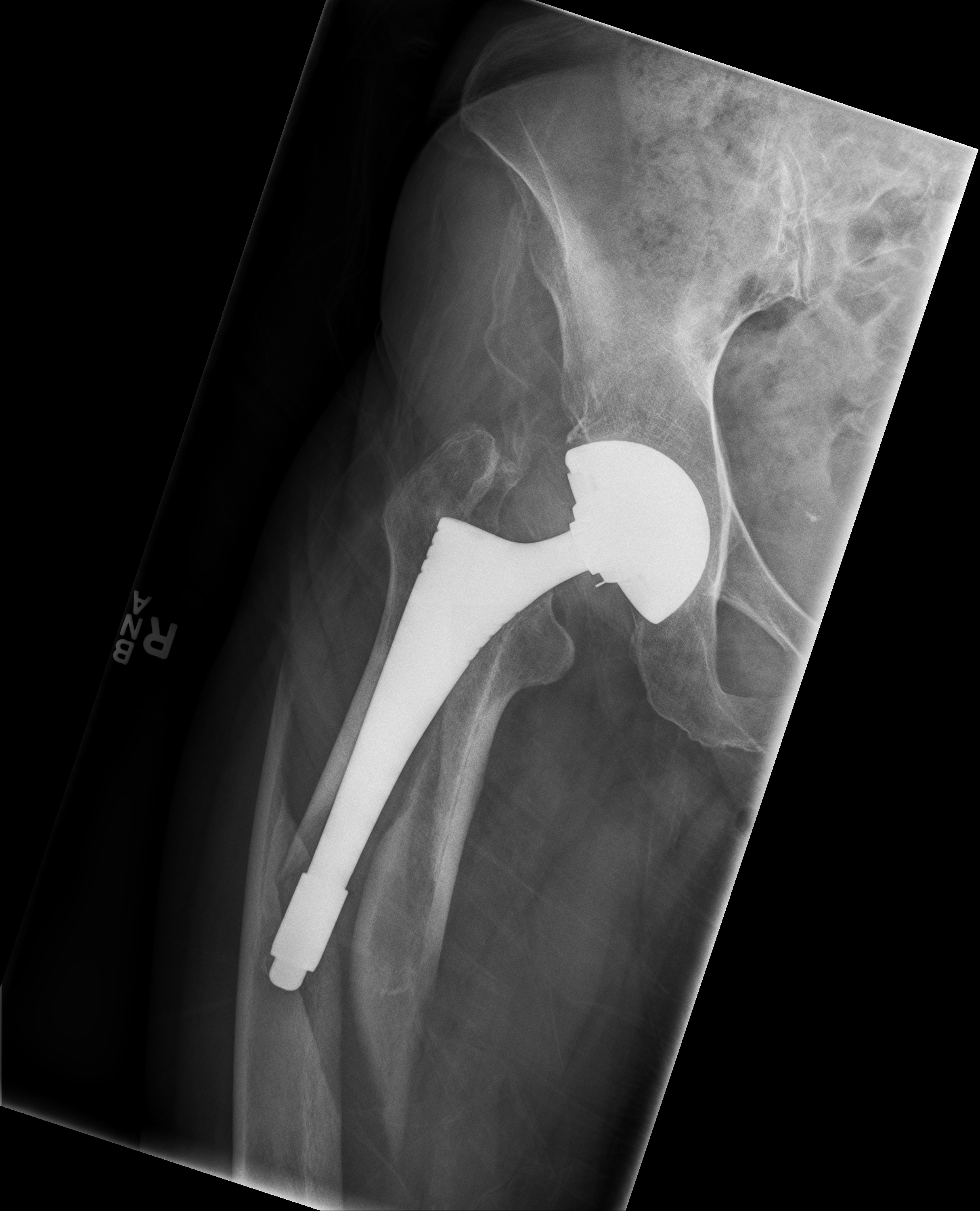
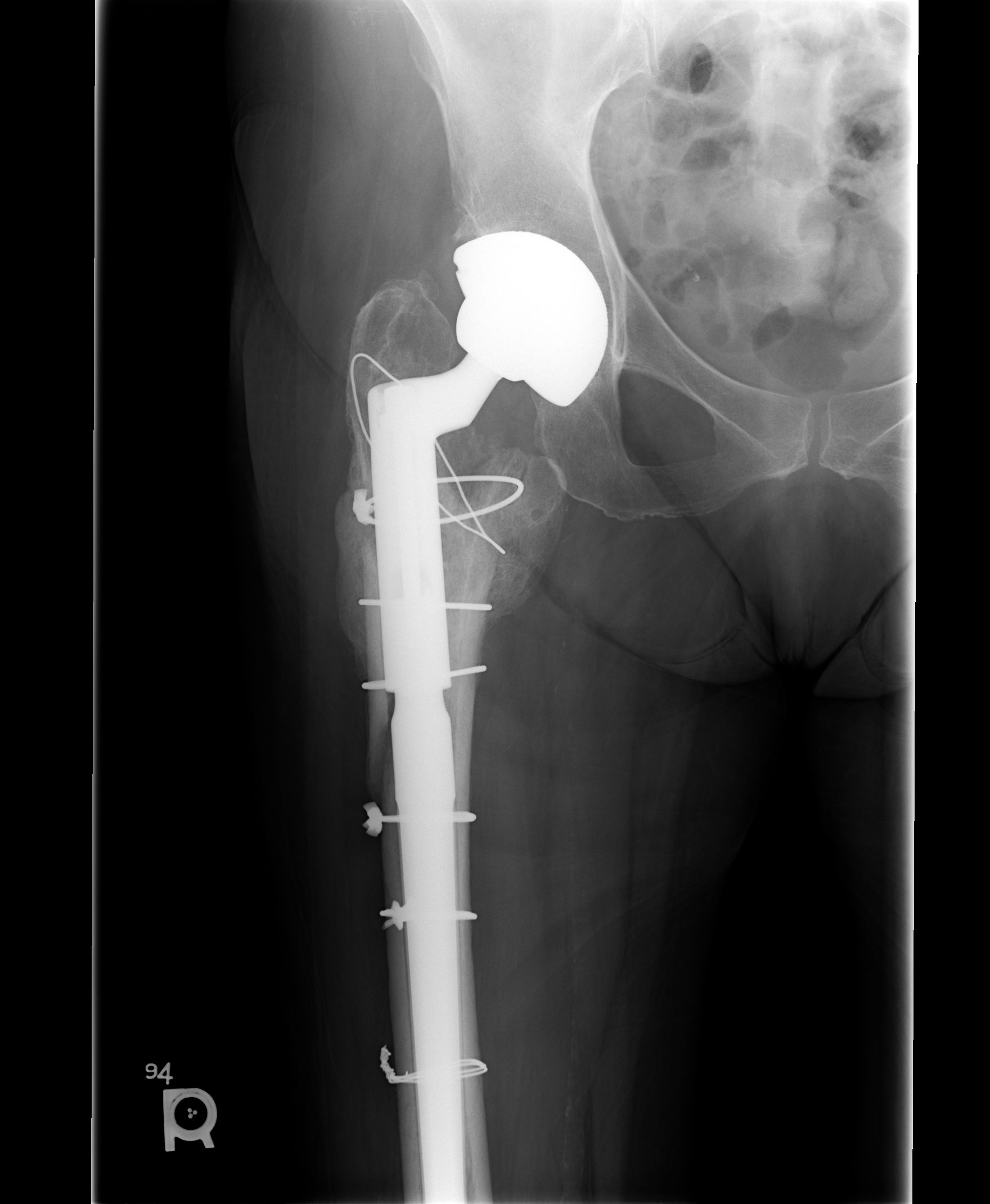
We present an example of complex revision performed by our doctors.
The following is an xray of a 84 year old lady sustained a fracture of the femur bone and loosening of the component, 20 years after her hip replacement an example of complex revision performed by our doctors.
Warning: session_start(): Cannot send session cookie - headers already sent by (output started at /home2/edotsind/public_html/jayamhospital/RevisionHipReplacement.php:334) in /home2/edotsind/public_html/jayamhospital/html.php on line 3
Warning: session_start(): Cannot send session cache limiter - headers already sent (output started at /home2/edotsind/public_html/jayamhospital/RevisionHipReplacement.php:334) in /home2/edotsind/public_html/jayamhospital/html.php on line 3